
I wrote this post because, throughout my data engineering journey, I’ve had to pick up new skills and technologies in order to get my work done. Along the way I have felt:
I knew I wasn’t alone when I saw this tweet:
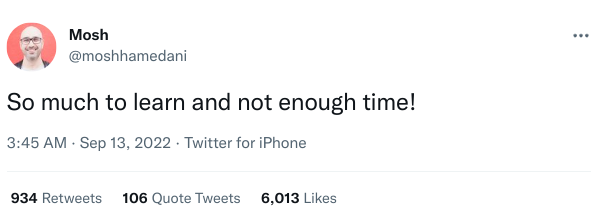
I’m still reeling from the shock, I mean, this is Mosh we’re talking about.
If any of this describes you, then we’re both not alone.
I have some pointers for you to consider. But first I’ll show some of the mindset changes I had to make…

It is way easy to set goals. Just like those new year resolutions, you start out full of motivation and you’re so sure of yourself. Then somewhere in the middle, the motivation starts to wane and soon you’re back to square one.
After failing this way multiple times, I realised my idea of setting goals needed to change. James Clear puts it this way in his book Atomic Habits:
“Goals are about the results you want to achieve. Systems are about the processes that lead to those results.”
Goals become your destination and the system becomes the small consistent actions taken to reach there. Your next thought the moment you start thinking about a goal should be:
Thinking in terms of systems also means you need sufficient information about the goal in order to create the required small actions that can be repeated over time.

Author Cal Newport defines the Deep work principle as follows:
“Deep work: Professional activities performed in a state of distraction-free concentration that push your cognitive capabilities to their limit. These efforts create new value, improve your skill and are hard to replicate.”
Our world has become increasingly full of distractions. I can’t count how many times, I found myself stuck in twitter’s infinite scroll, mindlessly thumbing through IG post after post, one youtube video after the other. then hours pass by and guilt creeps in.
For you to achieve the needed results, you need some alone, distraction-free time where you can have an unbroken concentration. You need to fight for it and be bullish about not giving up that time to any other thing.
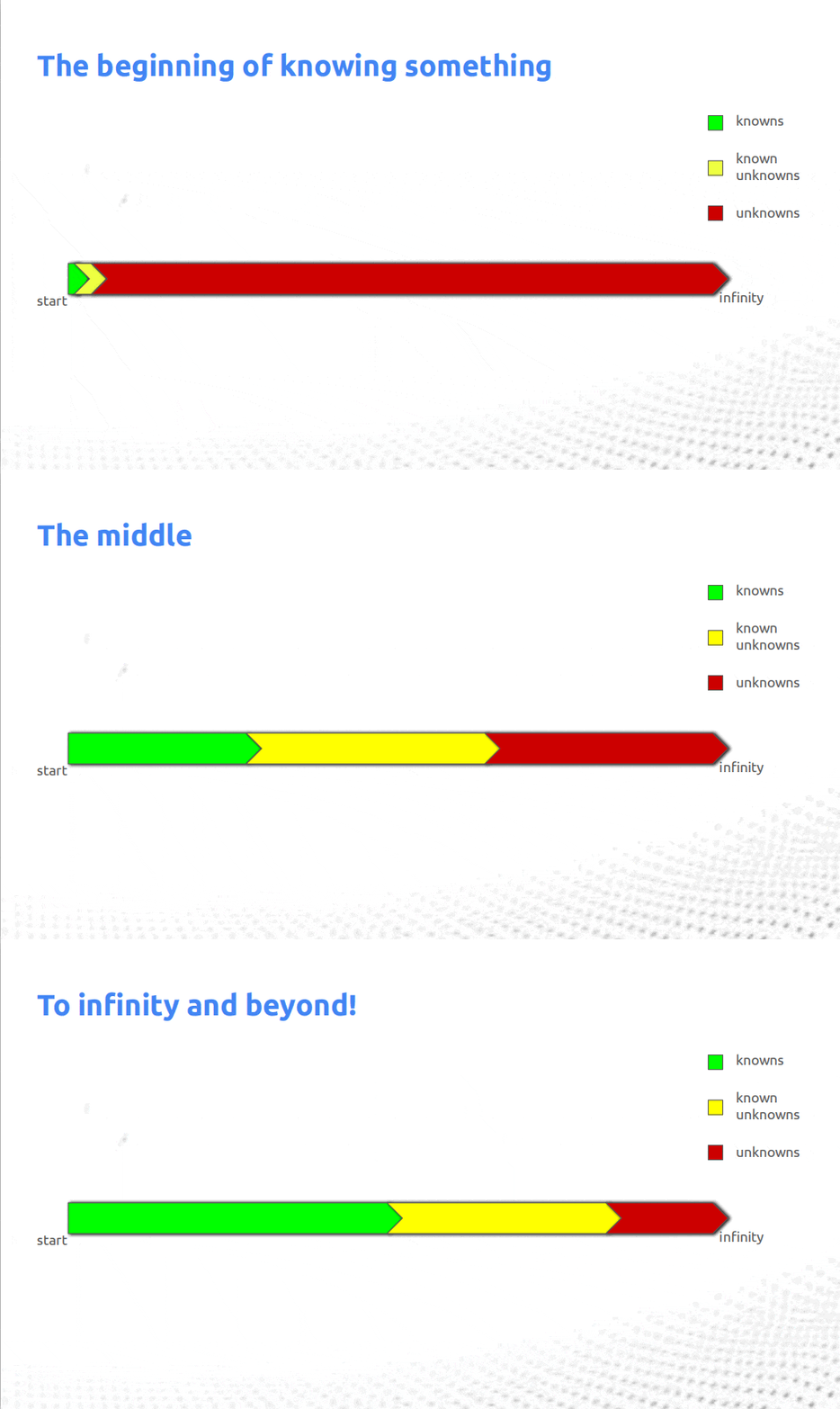
The knowledge journey is a long one and I found that at any point along the way these things will be true:
It is said that a problem identified is a problem half-solved. So knowing which position on this journey you’re starting from provides some clarity on what you need to do.
Coming to the realization that for anything I’m about to learn, I will feel pretty dumb in the beginning was reassuring and helped me to be less self-critical and patient.
So here are some pointers to consider if you’re seeking to have a learning habit.

If you’re already in a tech role…You’re an apprentice!
Even before you start thinking that you need to do a side project or buy an online course. Don’t underestimate the things you’re learning on your day-to-day. Just don’t write it off.
Ask a lot of questions ie Why was the code written this way? Why are they using this tech stack? If you’re dealing with a code base, track commit history on a script to see how a particular feature evolved.
Find a way to keep track of your learnings. The knowledge you gained through experience sticks the best!! For me I found this approach for tracking my learnings:
Bottom line is, documenting is a great way to reinforce what you learn.
A Learning Proof of Concept (POC)
Another strategy I found really cool was the idea of a ‘learning’ PoC.
Learning a language or a new framework or tool can be daunting but a PoC gives you an opportunity just to try a small part of it out. It is experimental, and you quickly get some form of instant gratification and a sense of what you can achieve with the new information gathered from the experimentation.
For instance, in order to learn how to build a Flask web app. Rather than thinking about first taking a long course. (which is the most logical thing I will do!) I’ll just take a youtube video and code along while the guy over the internet builds. Then after completing it, I have an idea of what don’t know and then I know where to search to fill those gaps.
Structure Structure Structure!!
If you’re starting out as a novice, because you don’t have a lot of information, you’re likely to set lofty, uninformed goals and be overwhelmed and discouraged when they are not met.

I found that usually what is needed is a map to follow, not necessarily a full map but at the very least, a defined start and middle. You need to be able to gather sufficient information, so you can refine your goal and carve out a system to help you achieve it. The best way I’ve found to get that structure is from current practitioners.
Imagine you’re working as a lab technician, and you want to transition into a data analyst role. The first thing you need to find is a current data analyst. And this is where the internet shines; A quick tweet asking for anyone to guide you, A quick search on LinkedIn, a google search for communities in your locality where you can find support, subreddits, quora forums the list goes on. But don’t forget your goal when you’re searching, people easily get caught up in this cycle of connecting with others but not making the most of it.
Also, most online courses on Udemy, Udacity, Coursera etc have a well-outlined curriculum to give a sense of what needs to be learnt from beginning to end. If you don’t have the money to buy the course, you can document that curriculum and turn to google for each concept. (I did this a couple of times too)
You want structure! and once you get that the responsibility rests on you to design your system and start committing to it.
A series of questions you can ask yourself when you want to build a learning routine:
Building a learning routine is a habit and this doesn’t fall into place in a day not even in weeks. Start small and try to achieve consistency. You’re likely to be overwhelmed at some point, maybe miss a few takes. Don’t let the guilt get to you just focus on the next take.
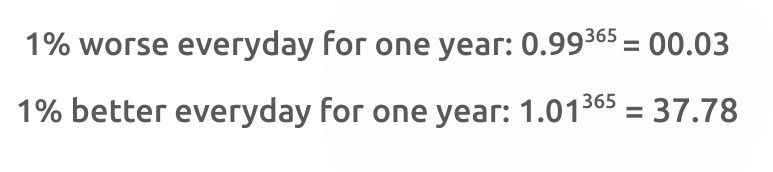
Well, nothing more to be said here. That’s as clear as clear can be :)
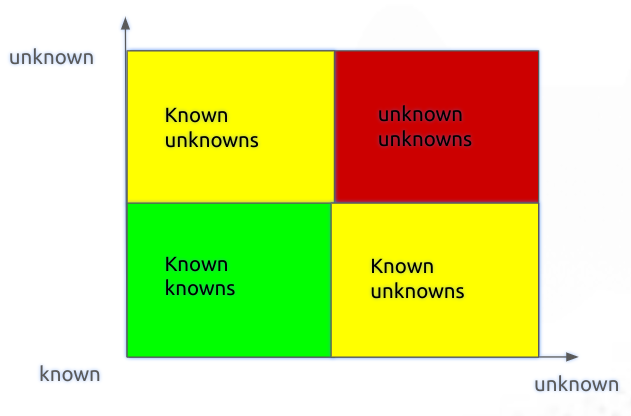
At any point in your career, there are going to be things you know, things you know you don’t know and things you don’t know you don’t know.
As much as you’ll strive to continually turn those unknowns knowns to knowns, learn to live with the fact that there’ll forever be things you may never know and that’s ok too.
In conclusion, I hope;
Do check out Atomic Habits by James Clear and Deep Work by Cal Newport! Really really great books!!
Cheers and happy learning and growing!